
Before opening a CFD account, weigh how much of your balance a single move can take.
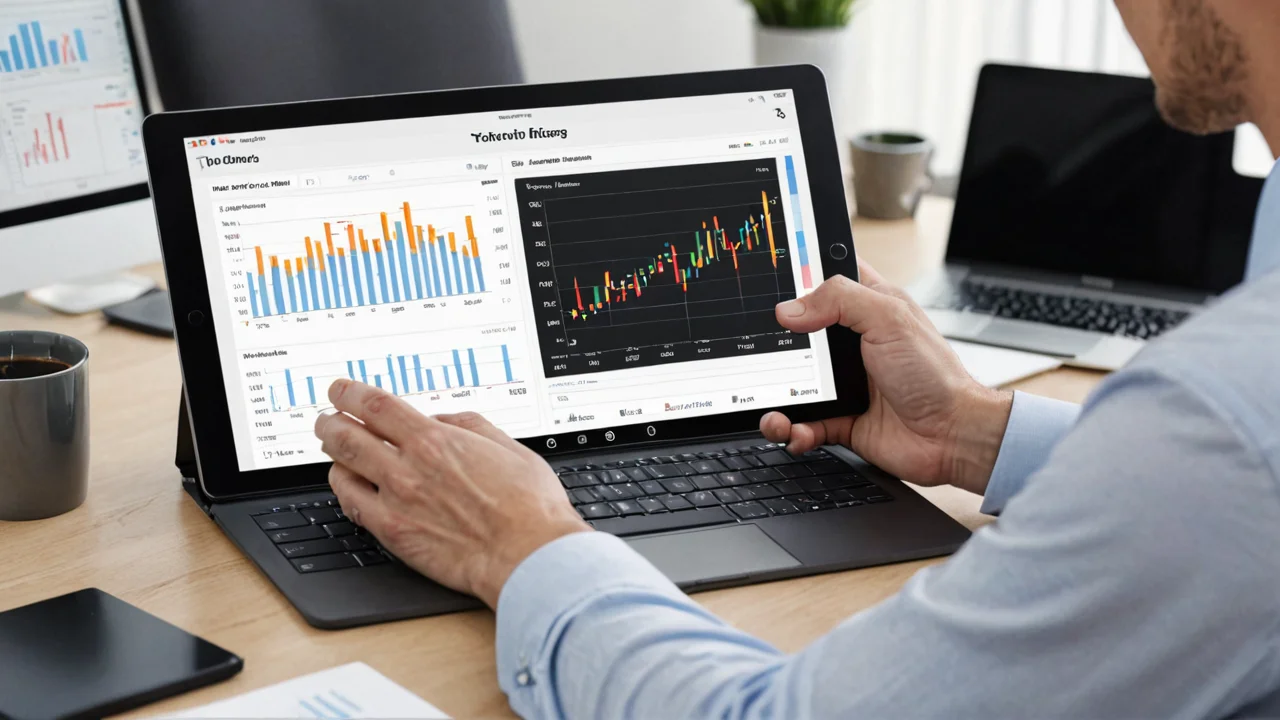
On Capital.com, copy trading sits inside a single Standard account at a CFD-only broker, so what you are actually copying is leveraged CFD positions, not shares someone else owns.
That distinction matters more in Kenya than most people realise.
What Copy Trading Means Here
Capital.com is a CFD broker. Everything you trade, and everything you copy, is a contract for difference. You never own the underlying Tesla share or the UKOIL position you are mirroring. You hold a leveraged contract with an expiry-less funding cost attached.
For copy trading that changes three things:
- Your copied position is leveraged, so a 2% move against the trader you follow is not a 2% move in your account
- Overnight funding gets charged on leveraged positions and it compounds quietly
- If the trader you copy holds swing positions for weeks, you pay that funding too, whether or not the trade wins
The broker itself runs a single universal Standard retail account. There are no tiered Silver/Gold/Platinum packages. If you are eligible for Professional status you can apply for it separately, and that changes your leverage and protections, but for most Kenyan retail traders the Standard account is the whole story.
How It Works in Practice
You fund the account, pick a strategy or trader to mirror, set a copy ratio, and the platform replicates their entries and exits proportionally. Your money stays in your account; you are not handing it to anyone.
The part people underestimate is the ratio. If a trader is running a 50,000 USD account and takes a 2% risk per trade, and you mirror them with 500 USD at the same ratio, your risk per trade is 50% of a trade idea that was sized for a much bigger cushion. Same signal, completely different outcome.
Capital.com is commission-free with spread-only pricing. Floating spreads start around 0.6 pips on major pairs, and UKOIL tested near 0.7 pips in 2026. There is no separate copy trading commission layered on top.
| Item | Detail |
|---|---|
| Account type | Single Standard retail account |
| Minimum deposit | 20 USD/UKOIL by card, 50 by wire |
| Pricing model | Spread-only, no commission |
| UKOIL spread | Around 0.7 pips in 2026 testing |
| Overnight cost | Charged on leveraged positions |
| Instrument range | 4,500 to 6,000+ CFDs |
| Crypto CFDs | 285+ |
The Kenya Angle Worth Knowing
Capital.com received a CMA Kenya Dealing Online Foreign Exchange Broker licence, No. 244, granted 15 January 2026. The entity onboarding Kenyan clients is locally regulated, with segregated client funds and a local dispute-resolution process.
That is a real difference from offshore brokers advertising 1:1000 leverage. Under CMA rules, licensed brokers cap retail leverage at around 1:400 on major pairs, must hold KES 50 million in paid-up capital, and submit to audits. You can verify any firm on the official register at licensees.cma.or.ke.
Capital.com's exact local leverage cap was not verified at review time, so confirm it with the broker directly before you size anything. The broker operates inside the CMA framework, not outside it.
What to Weigh Before You Copy
Copy trading appeals because it sounds like delegation. It is not. You are still the one bearing the loss when the strategy you mirror hits a bad month, and CFD losses can be substantial.
On funding: Capital.com accounts for Kenyan clients are USD-denominated, and local KES account availability was not verified at review. That means a conversion cost applies whenever you move shillings in or out. It is small per transfer but it adds up if you top up frequently.
On payments: CMA-licensed brokers in Kenya commonly integrate M-Pesa and local bank transfer. Capital.com's specific M-Pesa support was not verified at review, so confirm this before assuming you can fund the same way you fund everything else. Minimum deposit is 20 by card and 50 by wire, with no broker-side deposit or withdrawal fees.
On taxes: for most Kenyan retail traders, forex and CFD profits are treated as ordinary income, not capital gains. They go on your annual KRA return, taxed on graduated bands from roughly 10% up to a 35% top marginal rate. Trading through a company means a 30% corporate rate. Deductible costs include platform fees, internet and training. Tax residents file between 1 January and 30 June, declaring worldwide income including foreign-sourced trading gains.
Swap-free accounts are available on request for eligible clients.
Choosing the Trader You Mirror
This is where most of the outcome is decided, and it has nothing to do with the broker.
| What to check | Why it matters |
|---|---|
| Drawdown history | A 40% drawdown needs a 67% gain to recover |
| Trade frequency | High-frequency strategies rack up spread costs |
| Average holding time | Longer holds mean more overnight funding |
| Position sizing logic | Fixed lot vs percentage risk changes everything |
| How long it has run | Three months of results tells you very little |
The copy-trading scams the CMA warns about promise guaranteed returns, run through M-Pesa, and often operate under the label of an "account manager." The regulator has issued repeated cautionary statements against unlicensed online forex entities and directs victims to its Fraud Investigation Unit. The genuine version of copy trading involves no one else touching your money.
Where the Real Limits Sit
Capital.com runs spread-only pricing with no deposit bonus offers. What there is instead is a demo account and an education section.
Platform access covers the proprietary web and mobile app plus MT4, MT5 and TradingView integration. If you already have a TradingView workflow, that saves rebuilding your chart setup elsewhere.
The instruments range is wide: 4,500 to 6,000+ CFDs across shares, indices, commodities, forex, crypto and ETFs, with 285+ crypto CFDs alone. The catch is that all of it is CFD exposure. If you want to hold actual shares in a Kenyan or US company, this is not that product, and no amount of copy trading changes it.
The CMA licence is a positive signal compared with offshore-only operators, but it does not remove market risk. Standard CFD loss risk applies exactly the same as it does anywhere else.


Asked and answered
Does copy trading on Capital.com charge extra fees?
No separate copy trading commission is layered on. The broker runs commission-free, spread-only pricing, so your cost is the spread on each position, typically around 0.6 pips and up on major pairs, plus overnight funding on anything held past the daily rollover.
Can I copy trades with only 20 dollars?
The minimum deposit is 20 USD by card. A small account mirroring a large one produces distorted risk unless you adjust the copy ratio down hard. With a few hundred dollars you have enough room to mirror conservative strategies with sensible position sizing.
Is copy trading legal for Kenyan traders?
Retail forex and CFD trading is legal and regulated in Kenya. Any entity offering online forex to Kenyan residents must hold a valid CMA licence, and Capital.com holds licence No. 244 granted 15 January 2026. Verify the firm on the CMA register before funding anything.
What are the main risks of copying a trader?
The main ones are drawdown you did not anticipate, overnight funding on leveraged positions held for days, and position sizing that does not scale to your account balance. Past performance of a strategy says nothing about what happens next, and a strategy that worked for six months can give back most of it in six weeks.
Do I still pay tax on copied trades in Kenya?
Yes. For most retail traders, forex and CFD profits are treated as ordinary income by KRA, added to your taxable income and taxed on graduated bands from roughly 10% up to 35%. Residents file annually between 1 January and 30 June, declaring worldwide income including foreign-sourced trading gains.